SmartEV Rewards
EV charging incentive programs designed to shift behavior away from peak grid demand
Overview
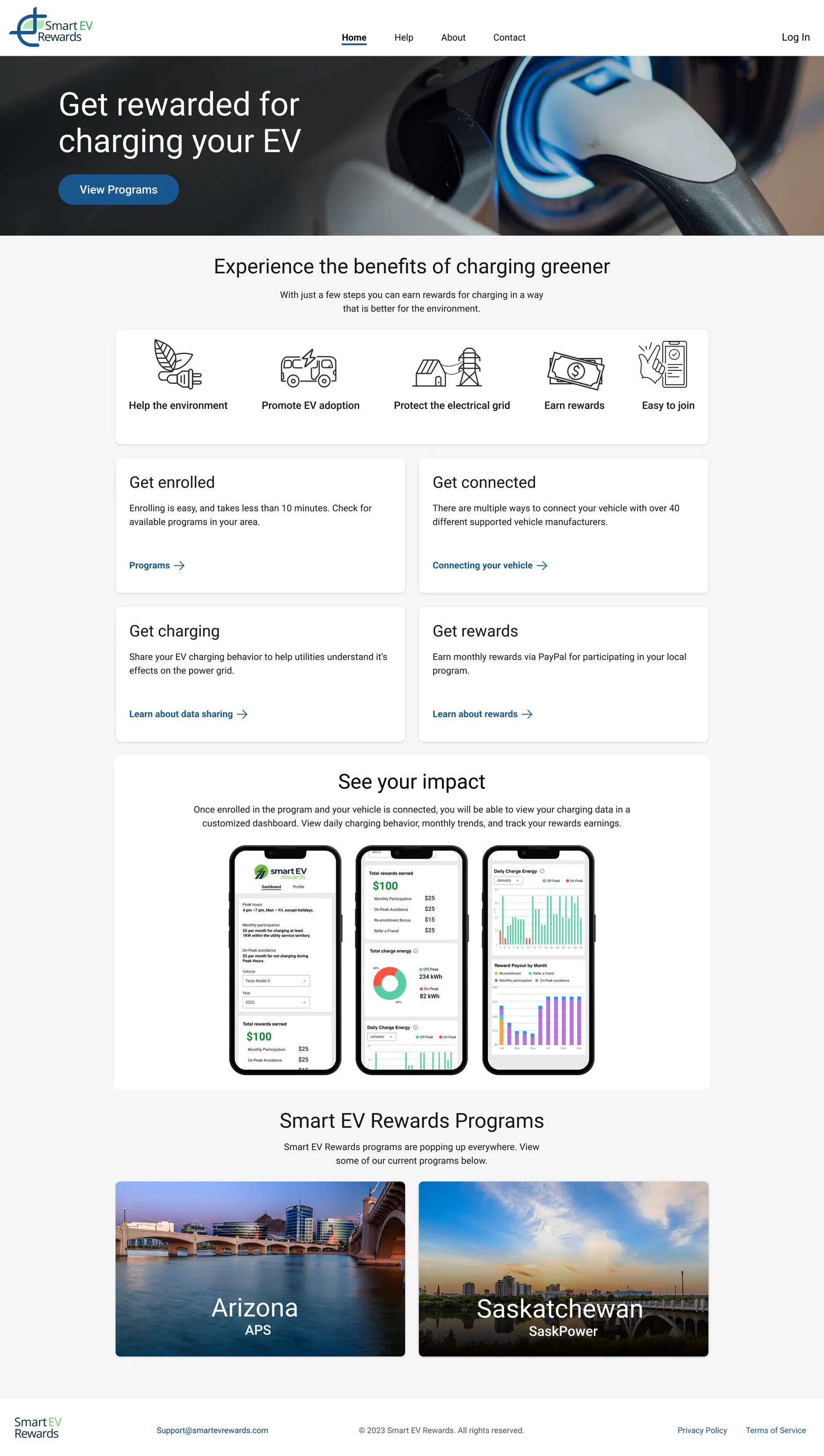
In Q2 2023, I worked with two major utilities developing programs to shift EV charging behavior away from peak hours. As electric vehicle adoption accelerated, utilities faced increasing grid stress during peak demand windows. These programs aimed to incentivize off-peak charging through rewards and behavioral nudges.
The work spanned the full product surface:
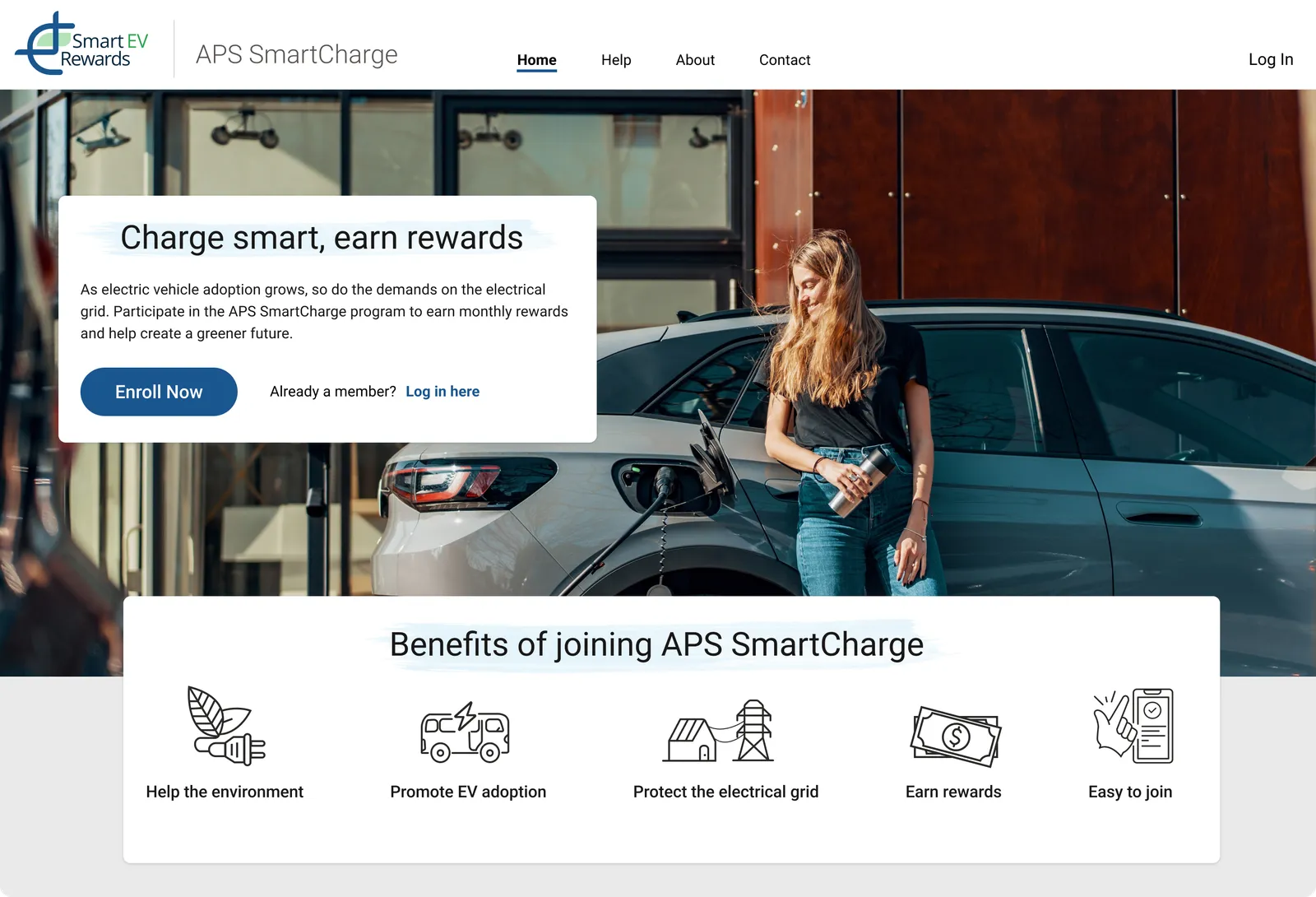
- Landing pages with application and enrollment workflows
- Brand direction including logos, icons, imagery, typography, and color palette
- Participant portals featuring data visualization and charts
- Utility manager dashboards for tracking enrollment, charging trends, and comparing treatment groups
Context & Complexity
This project carried real technical and organizational complexity. Two distinct utilities, each with their own goals and constraints. Geotab telematics hardware for vehicle data. Rolling Energy Resources API for charging intelligence. HubSpot CRM for enrollment management.
Goals centered on user engagement and behavioral change. Utilities had struggled with application success rates in previous programs, so improving that funnel was a key area of focus from the start.
Team & Role
My role
- Lead product designer across all program surfaces
- Designed enrollment flows, participant dashboards, and utility tools
- Developed brand direction for both programs
- Identified and resolved UX issues in third-party partner workflows
Team
- Product manager
- Development lead + 2 frontend + 1 backend developer
- 2 utility program management teams
Maximizing Program Application Success
Multiple Entry Points
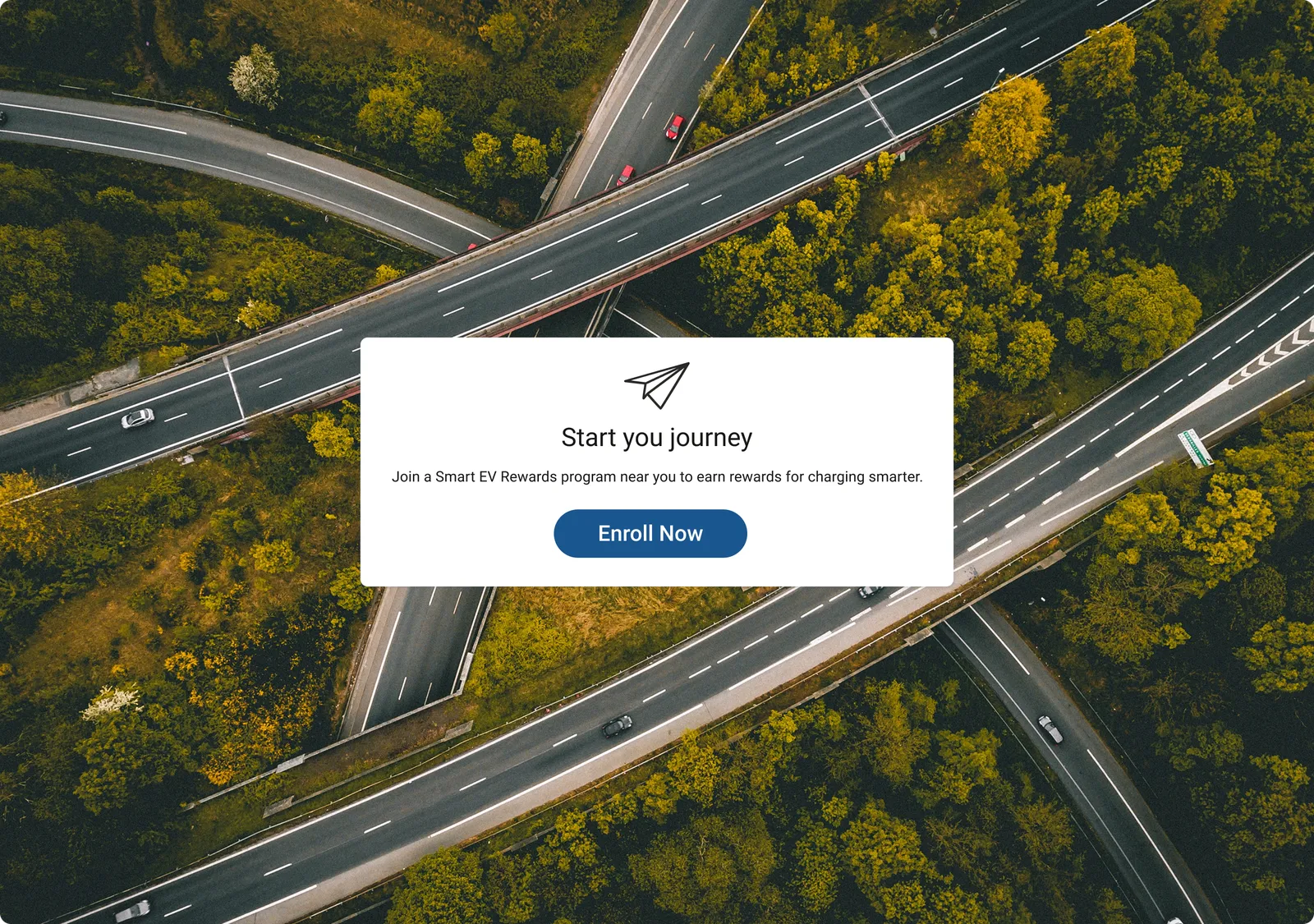
The enrollment strategy centered on creating multiple entry points into applications with transparent time expectations. The design emphasized both monetary rewards and dashboard visualizations to incentivize participation and set clear expectations from the first touchpoint.
Progressive Disclosure
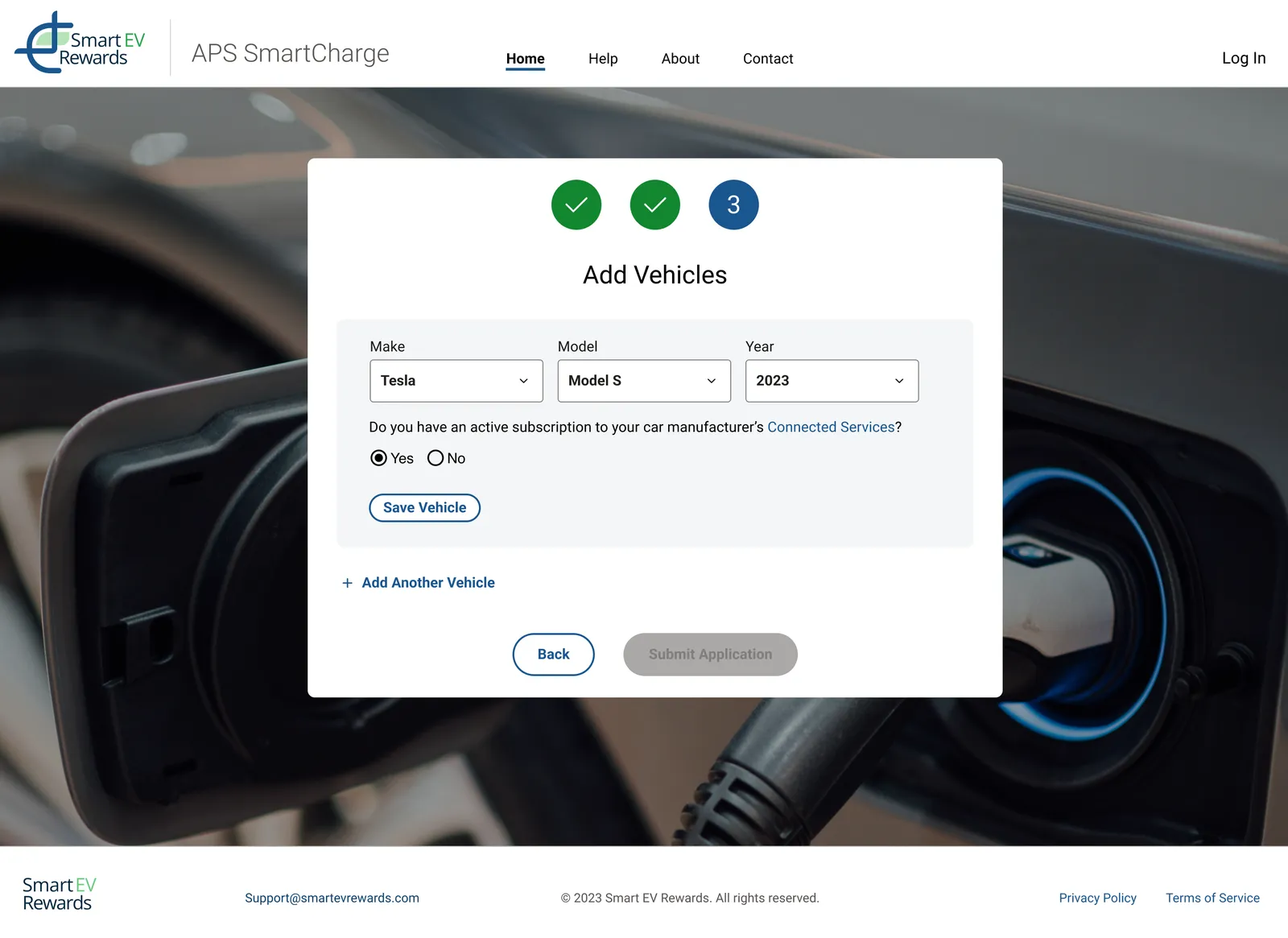
Program details, particularly around data-sharing requirements, were presented contextually without overwhelming prospective users. Multi-step form design with comprehensive error handling improved completion rates while maintaining data quality in CRM systems.
Third-Party Integration
Participants moved through workflows that touched external partner systems. I identified UX issues within these third-party flows before launch and collaborated directly on improvements, ensuring the end-to-end experience felt cohesive rather than fragmented.
Providing Value to Program Participants
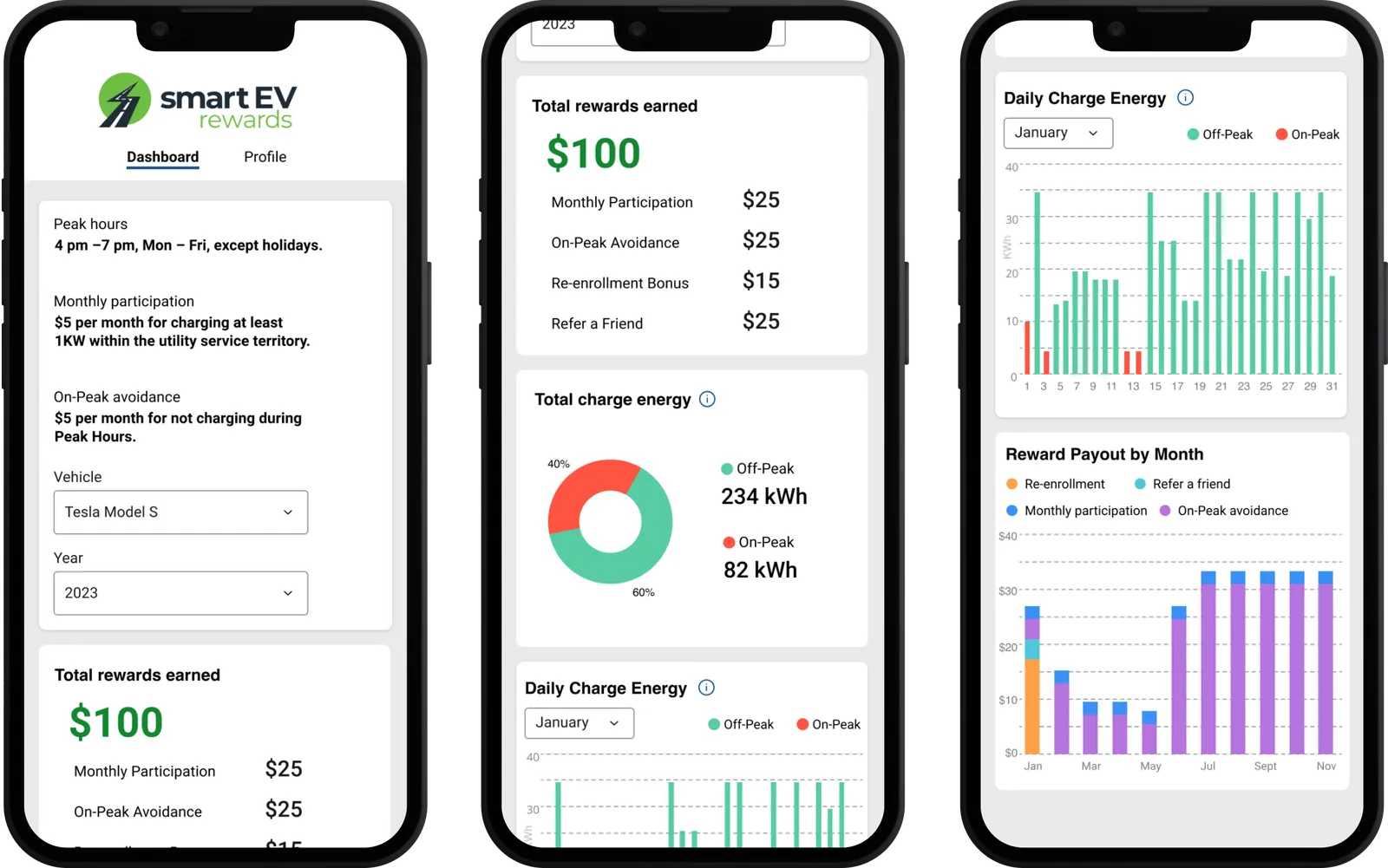
Responsive dashboards enabled participants to track reward payouts and monitor daily and monthly charging patterns. The design was mobile-first, recognizing that most participants would check their status on the go.
Data visualization was central to the participant experience. Charts showing charging behavior over time gave participants a tangible connection to the program's goals, reinforcing the behavioral shift the utilities were looking for.
Providing Value to Utilities
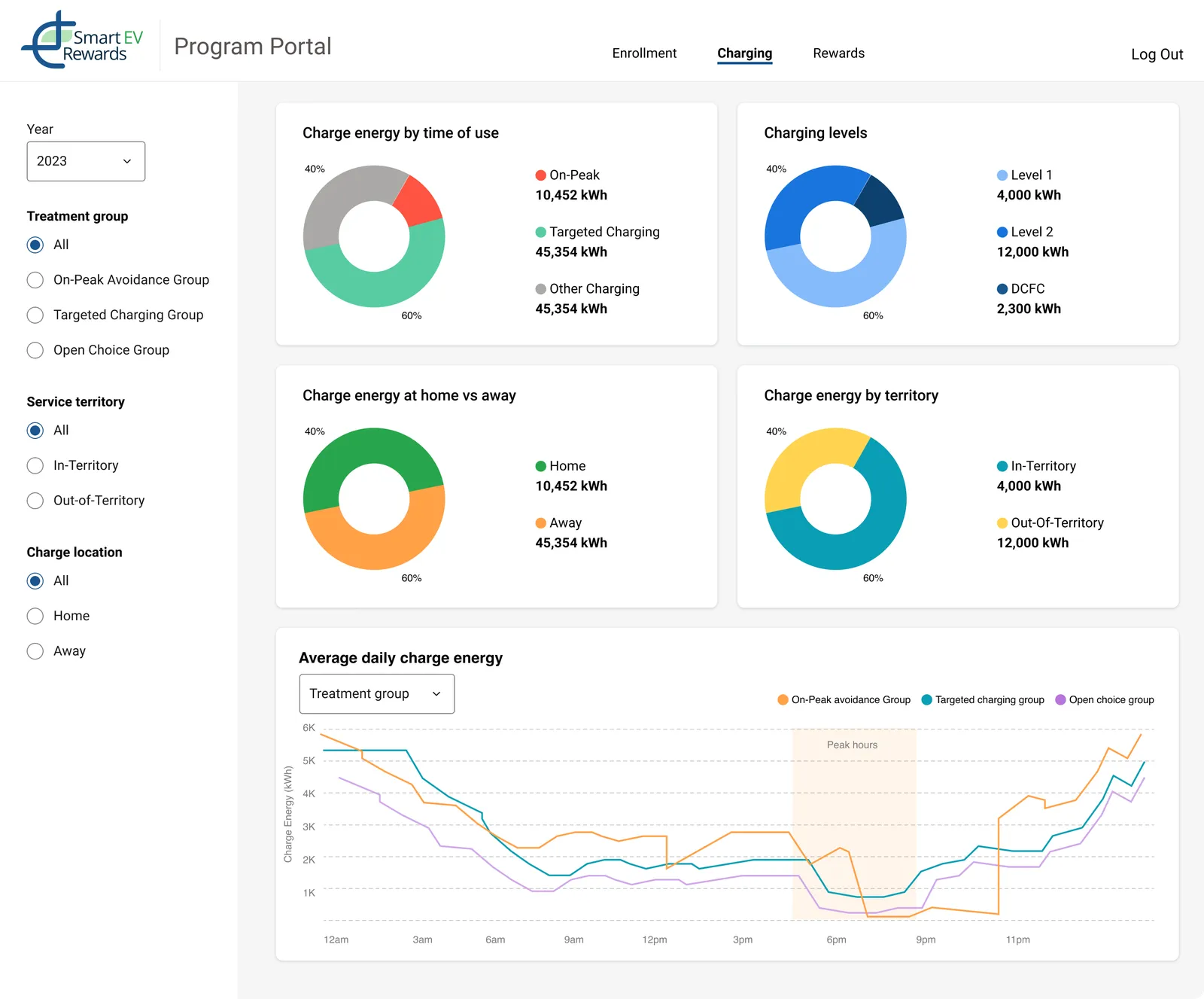
Program managers needed tools to track application status, validate reward payouts, and measure the effectiveness of different incentive structures across program stages. The utility dashboards surfaced enrollment metrics, charging energy trends, and treatment group comparisons in a format that supported both day-to-day operations and executive reporting.
Results
- Successfully enrolled 1,500+ participants across 2 EV programs
- Positive utility and participant feedback on dashboards
- Increased customer engagement compared to previous programs
- Improved application success rates
- Reduced support requirements
- Enhanced CRM data quality
Both programs continued with ongoing iterative improvements based on participant and utility feedback after launch.
Reflection
This project reinforced the importance of designing for multiple audiences simultaneously. Participants needed clarity and motivation. Utilities needed confidence and control. The underlying systems needed to be flexible enough to support two distinct programs with different rules, incentive structures, and stakeholder expectations.
The biggest design challenge was progressive disclosure in the enrollment flow. Presenting enough information to build trust without overwhelming users who just wanted to sign up and start earning rewards. Getting that balance right had a measurable impact on application success rates.